

Zurich Zoo Spectacled Bear Cubs Take First Steps Into Mountain Forest Habitat
Two young spectacled bears have begun exploring their environment in the Sangay mountain forest at Zurich Zoo alongside their mother after recently leaving their birthing box for the first time.
The cubs, fathered by Raymi, a male from the United States, are part of a population considered genetically valuable for the reserve population of this endangered species. The mother, Rica, is experiencing her first offspring at nine years old.
The young bears are described as curious but cautious as they move through their habitat, investigating trees, stones, and bushes. They remain close to their mother as they gradually explore the enclosure.
The cubs were born at the end of January and spent their first three months protected in a birthing box with their mother. At birth, spectacled bears are blind, nearly hairless, and weigh around 300 to 500 grams, making them comparable in size to a guinea pig. Their eyes open only after several weeks.
Zoo officials highlighted the importance of the birth for species preservation. The father, brought from the United States two years ago, carries genetic lines not previously represented in the European Endangered Species Programme, which is considered important for maintaining a stable reserve population.
Spectacled bears are native to South America and live across the Andes from Venezuela to Bolivia. They are adapted for climbing with strong forelegs and curved claws and typically live in mountain and cloud forests as well as high Andean grasslands and scrublands.
The species is considered threatened due to habitat loss, fragmentation, and human conflict caused by deforestation, agriculture, roads, and settlement expansion. Additional pressures include use in traditional medicine and illegal trade, particularly of cubs. With a low reproduction rate of one or two cubs every few years, the global population is estimated at fewer than 25,000 animals.
In early May, the cubs were examined for the first time, microchipped, and identified as males. Over the next two years, they will learn survival skills from their mother, including climbing and foraging.
They share their habitat with white-nosed coatis, which they are still becoming familiar with as part of a mixed-species environment designed to reflect natural conditions.
Clean HD download
Register a media account or sign in to buy & download this story
Sign in to download Apply for media accessClip details
Related

Coast Guard Helicopter Hoists Five People and Their Dog From Flooding Fishing Boat Off South Carolina
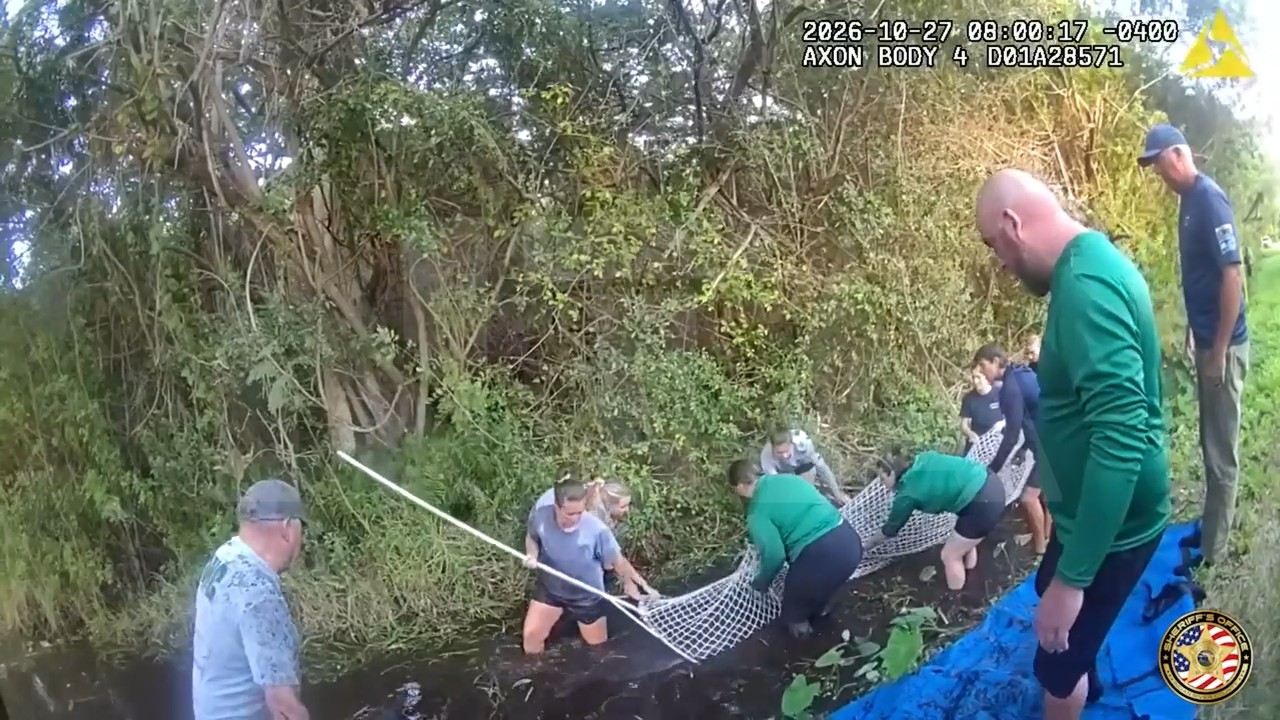
Deputies Help Rescue Manatee Stranded in Shallow Ditch in Florida

Alligator Found Lurking in Bushes on University of South Florida Campus